
Every clinic, hospital, laboratory and dialysis unit in Punjab is assessed by the Punjab Healthcare Commission (PHC) against its Minimum Service Delivery Standards (MSDS). UPMED explains each standard in plain language and gives you a self-assessment dashboard, so you know your score before the assessors arrive.
What is MSDS?
The Punjab Healthcare Commission was set up under the Punjab Healthcare Commission Act 2010 to improve healthcare services and end quackery in Punjab. It registers and licenses every healthcare establishment in the public and private sectors. To get and keep a licence, a facility must meet the Minimum Service Delivery Standards (MSDS) written for its type.
During an assessment, PHC assessors visit the facility and check specific, observable points called indicators: the signboard, registration certificate, staff files, patient records, emergency preparedness, infection control, medicines and more. Each indicator is marked as met, partially met or not met.
Find the MSDS for your facility
PHC has a separate MSDS manual for each type of healthcare establishment. Choose your facility below and go step by step: your manual, how it is scored, where to start reading, what the dashboard includes, the free demo and the fee.
Free PDF checklists for every facility
Every indicator of your manual on a few printable pages, each marked RED or YELLOW, with Met, Partly and Not met boxes and a score summary. Print the one for your facility and walk through it the way an assessor would.
- GP, family physician and specialist clinics (47 indicators)
- Dental clinics (69 indicators)
- Basic Health Units and MNHCs (75 indicators)
- Category II-C hospitals, 1 to 15 beds (118 indicators)
- Category II-B hospitals, 16 to 30 beds (122 indicators)
- Category II-A hospitals, 31 to 49 beds (152 indicators)
- Category I hospitals, 50 beds and more (162 indicators)
- Clinical laboratories (118 indicators)
- Dialysis facilities (37 standards)
MSDS guides by facility type
Our Understanding MSDS series explains the standards one indicator at a time, through short stories of doctors and managers preparing for real assessments.
GP, family physician and specialist clinics
Start with these three, then follow the indicators in order:
- The Inspector Who Came Knocking: What Every Clinic Owner in Punjab Must Know
- 18 Standards. 47 Indicators. One License: How the PHC Actually Scores Your Clinic
- Red, Yellow, and the Score That Decides Your Future: Understanding PHC’s Grading System
Category II-C hospitals (1 to 15 beds)
MSDS for Category II-C Hospitals: What Every Small Hospital in Punjab Must Know · Indicators 85 and 86: Six Wounds in One Month · All Category II-C guides →
For every healthcare establishment
Spill Management in Healthcare Establishments: Lessons from One Broken Bottle
Dental clinics, BHUs, hospitals, laboratories and dialysis units
Each series starts with an overview of its manual. More guides are added every week.
- Dental clinics: what every dental clinic in Punjab must know
- Basic Health Units: what every BHU in Punjab must know
- Category II-B hospitals (16 to 30 beds)
- Category II-A hospitals (31 to 49 beds)
- Category I hospitals (more than 50 beds)
- Clinical laboratories: PHC MSDS indicators for laboratories
- Dialysis centres and hospital dialysis units
The UPMED MSDS Dashboard
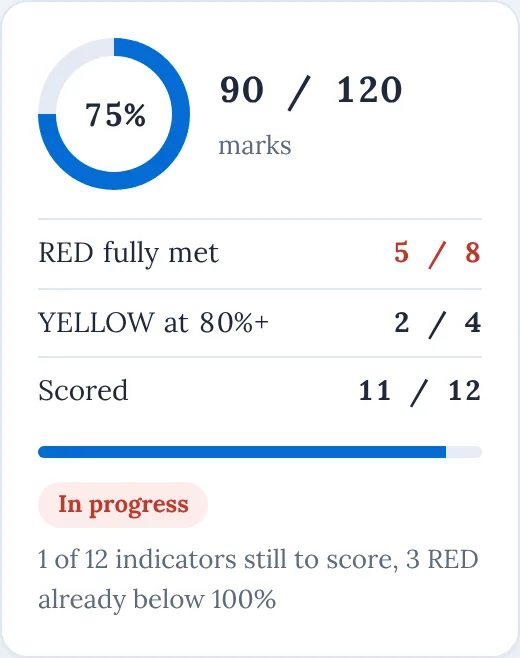
A self-assessment tool that walks you through every indicator of your facility’s manual, the way an assessor would.
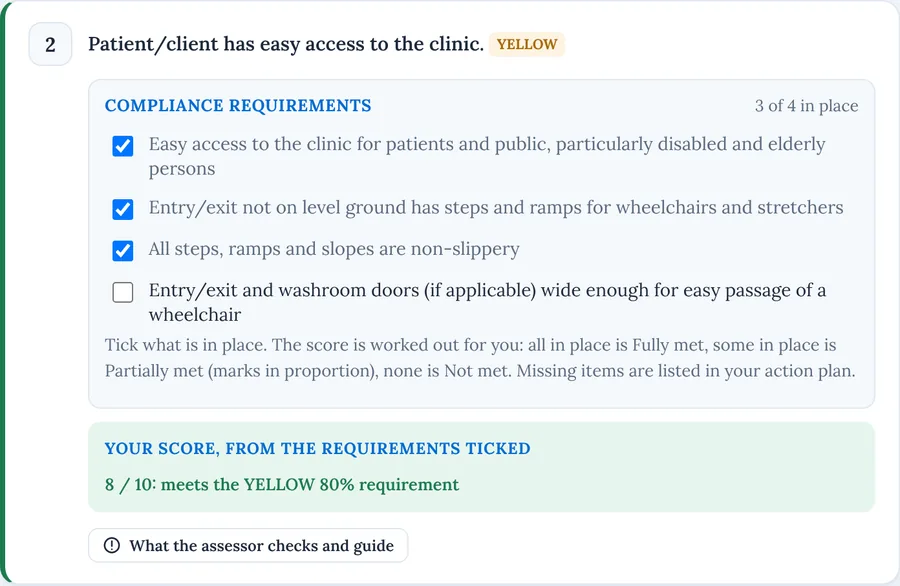
- Tick what is in place. Your score is worked out for you.
- See the RED and YELLOW indicators still to fix, at a glance.
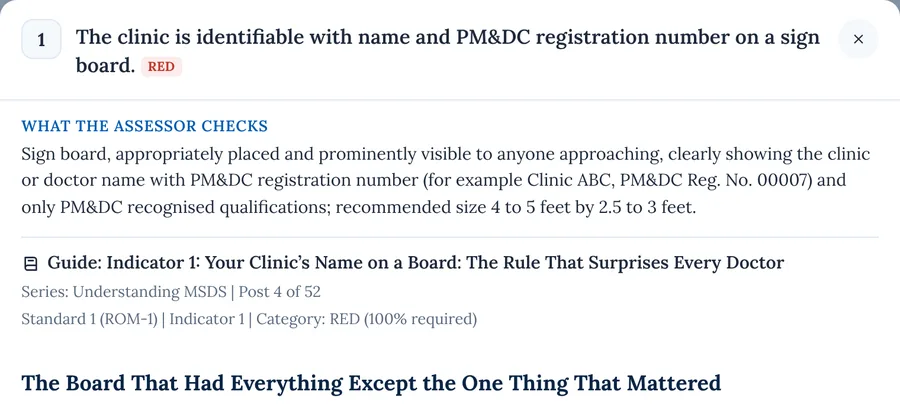
- Read what the assessor checks, with a guide for every indicator.
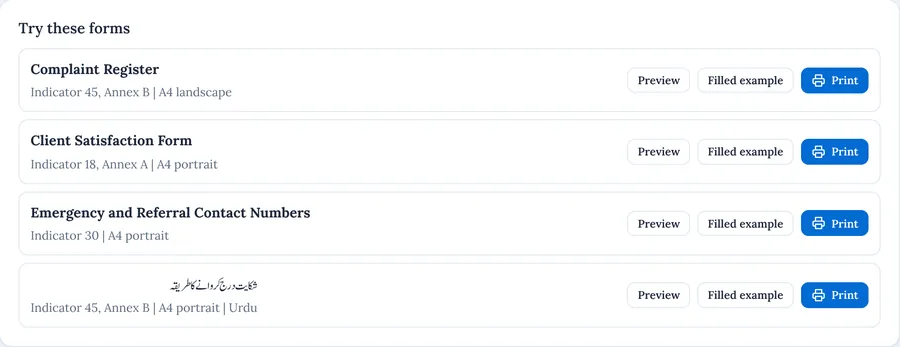
- Print 61 ready-made registers and forms, with filled examples.
- Keep dated assessments, an action plan and printable facility reports.
Dashboard plans
| Facility type | Fee |
|---|---|
| GP, family physician or specialist clinic | Rs 2,000 |
| Dental clinic | Rs 2,000 |
| Basic Health Unit (BHU) | Rs 2,000 |
| Category II-C hospital (1 to 15 beds) | Rs 4,000 |
| Category II-B hospital (16 to 30 beds) | Rs 5,000 |
| Category II-A hospital (31 to 49 beds) | Rs 6,000 |
| Category I hospital (50 beds and more) | Rs 7,500 |
| Clinical laboratory | Rs 5,500 |
| Dialysis centre or hospital dialysis unit | Rs 5,000 |
Each plan gives one year of access. Choose your facility on the membership page, pay and attach the payment screenshot. Your dashboard opens once the payment is confirmed.
Need help preparing?
Message UPMED on WhatsApp at 0304 2397393 with your facility type and city.
Frequently asked questions
Is meeting MSDS compulsory?
Yes. Under the PHC Act 2010, every healthcare establishment in Punjab must be registered and licensed by the Punjab Healthcare Commission, and licensing depends on meeting the MSDS for that type of facility.
What is the difference between RED and YELLOW indicators?
RED indicators need 100% compliance; there is no partial credit. YELLOW indicators need at least 80% compliance. The colour shows how much non-compliance is tolerated, not the subject of the indicator.
How many indicators does a GP clinic have?
The MSDS for GP, family physician and specialist clinics has 10 functional areas, 18 standards and 47 indicators: 25 RED and 22 YELLOW.
Can I try the dashboard before paying?
Yes. The MSDS Dashboard has a free demo. Paid plans keep your dated assessments, action plan and printable reports.
Does UPMED cover standards outside Punjab?
The MSDS described here and in the dashboard are those of the Punjab Healthcare Commission. Standards of other healthcare commissions will be added later.
Is the UPMED MSDS Dashboard an official PHC tool?
No. It is an independent preparation and guidance tool made by UPMED. It is not affiliated with or endorsed by the Punjab Healthcare Commission or any other healthcare commission.
UPMED is independent and not affiliated with the Punjab Healthcare Commission. Always check the current MSDS manual for your facility type.